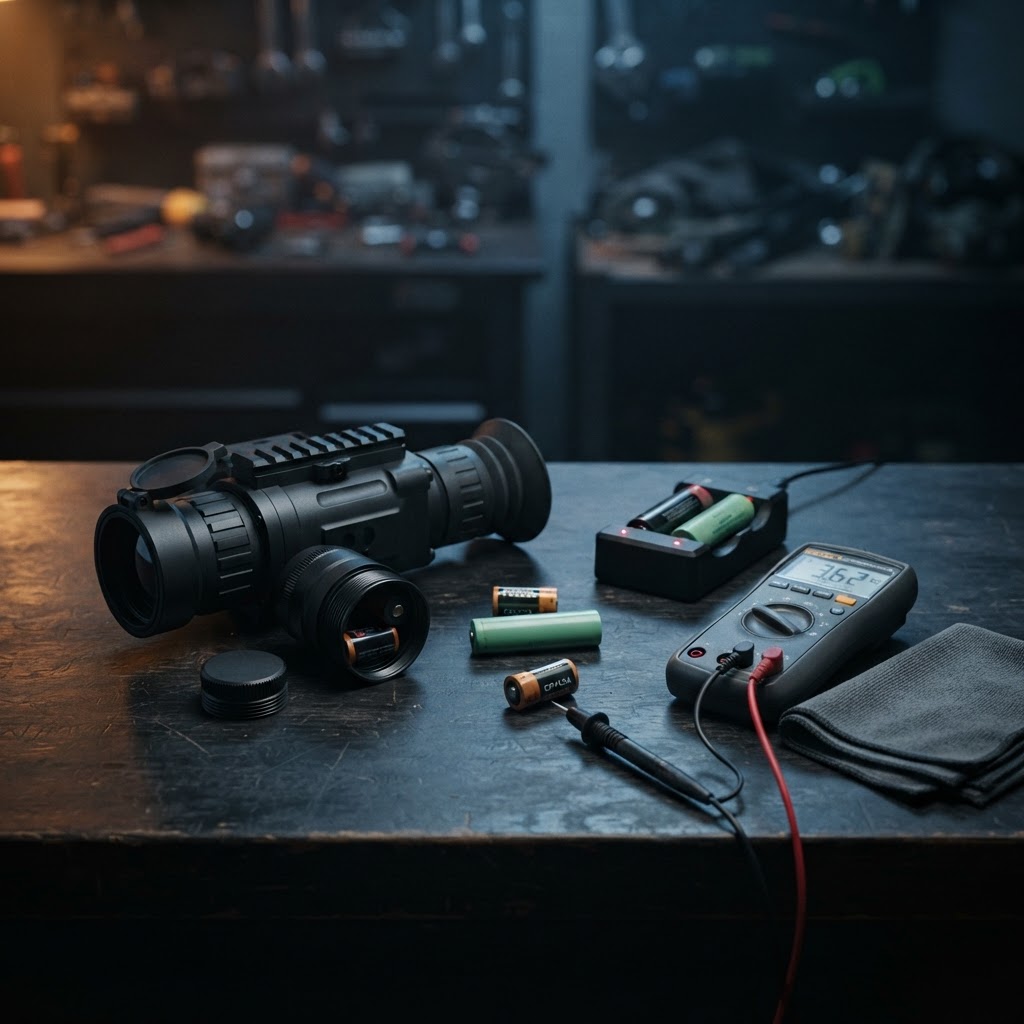

A digital night vision scope is a small computer with a screen and a light on the front, and it draws current like one. Hunters who are used to a glass scope lasting a whole season on one battery are often surprised when a night vision unit goes flat mid-hunt.
The good news is that almost all of the drain is under your control. This guide covers what uses the power, how cold changes the numbers, and how to make sure the scope is still running when the animal shows up.
Where the power actually goes
Four things dominate the draw on a digital night vision scope.
The illuminator is usually the largest single load. An IR emitter running at full power can use more current than the scope's sensor and display combined.
The screen is second. A bright backlit display at high brightness draws noticeably more than the same display dimmed, which is one more reason to run the image only as bright as you need to read it.
Recording and wireless come next. Writing video to a card, running Wi-Fi or Bluetooth to pair with a phone, and keeping a rangefinder module awake all pull power continuously, even when you are not actively using them.
Sleep and standby behaviour is the quiet one. Many scopes dim the display and drop into a low-power state rather than switching off, and a scope left in standby on a cold night can lose a meaningful share of its charge before you ever raise it.
Turn off what you are not using
Before the hunt, switch off Wi-Fi, Bluetooth and any app pairing you do not need. Turn off recording if you are not filming. If the scope has an auto-off or sleep timer, set it to something short enough to save power but long enough not to interrupt a stalk.
If the scope has a rangefinder, check whether it stays powered while the scope is on. Some units keep the laser module in a ready state, and that costs current for a feature you may only use once.
Lithium versus alkaline in the cold
The single biggest cause of "the battery died early" is chemistry, not capacity.
Alkaline cells lose voltage quickly as temperature drops. A cell that reads full at room temperature can sag enough to shut a scope down at 25 degrees, and it recovers when it warms back up, which is why the scope sometimes comes back to life in your pocket.
Lithium cells hold their voltage far better in cold and weigh less for the same energy. For any hunt below freezing, lithium is the right choice. Keep a spare set in an inside pocket where your body heat keeps them warm, and swap to the warm set before the cold set dies rather than after.
Cold batteries lie on the gauge
A battery meter reads voltage, and voltage sags in the cold. That means a scope can show a comfortable charge and then drop to a low-battery warning in minutes once the temperature falls.
Do not plan a hunt around the percentage on the screen. Plan around a measured runtime instead: run the scope at the brightness and IR power you actually hunt with, from a fresh set, and note how long it lasts. That number is your real capacity, and it will be shorter than the spec sheet.
Carry a spare and know the swap
Carry at least one full spare set, plus the tool or coin you need to open the compartment if it takes one. Practise the swap with gloves on, in the dark, before the season starts. A battery change that takes 90 seconds at the bench can take five minutes on a cold hillside with a headlamp you are trying not to shine.
If the scope uses a rechargeable pack rather than loose cells, carry a charged second pack. Packs age, so a pack that held a full night two seasons ago may not hold half of one now.
Rechargeable discipline
Rechargeables are fine for practice and for warm-weather use, but they have two quirks worth knowing.
First, many rechargeable cells run at a lower nominal voltage than lithium primaries, and some scopes warn or shut down early on them. Check what the manufacturer specifies.
Second, a rechargeable that has been sitting at full charge for months loses capacity. Charge packs shortly before you need them rather than leaving them topped up in a case all summer.
Storage and the off season
For long storage, remove loose cells from the scope. A leaking alkaline cell will destroy a battery compartment, and the repair usually costs more than the scope's battery budget for several years.
Store rechargeable packs at partial charge rather than full, keep them out of a hot truck cab, and check them once before the season starts. A quick runtime test at the bench tells you whether the pack is still worth carrying.
The field checklist
Fresh lithium cells in the scope, a warm spare set in a pocket, Wi-Fi and Bluetooth off, recording off unless you are filming, screen brightness set low, IR at the lowest power that gives a usable image, sleep timer set, and a known runtime figure from a real test. That list is the difference between a scope that works all night and one that quits at the worst possible moment.


