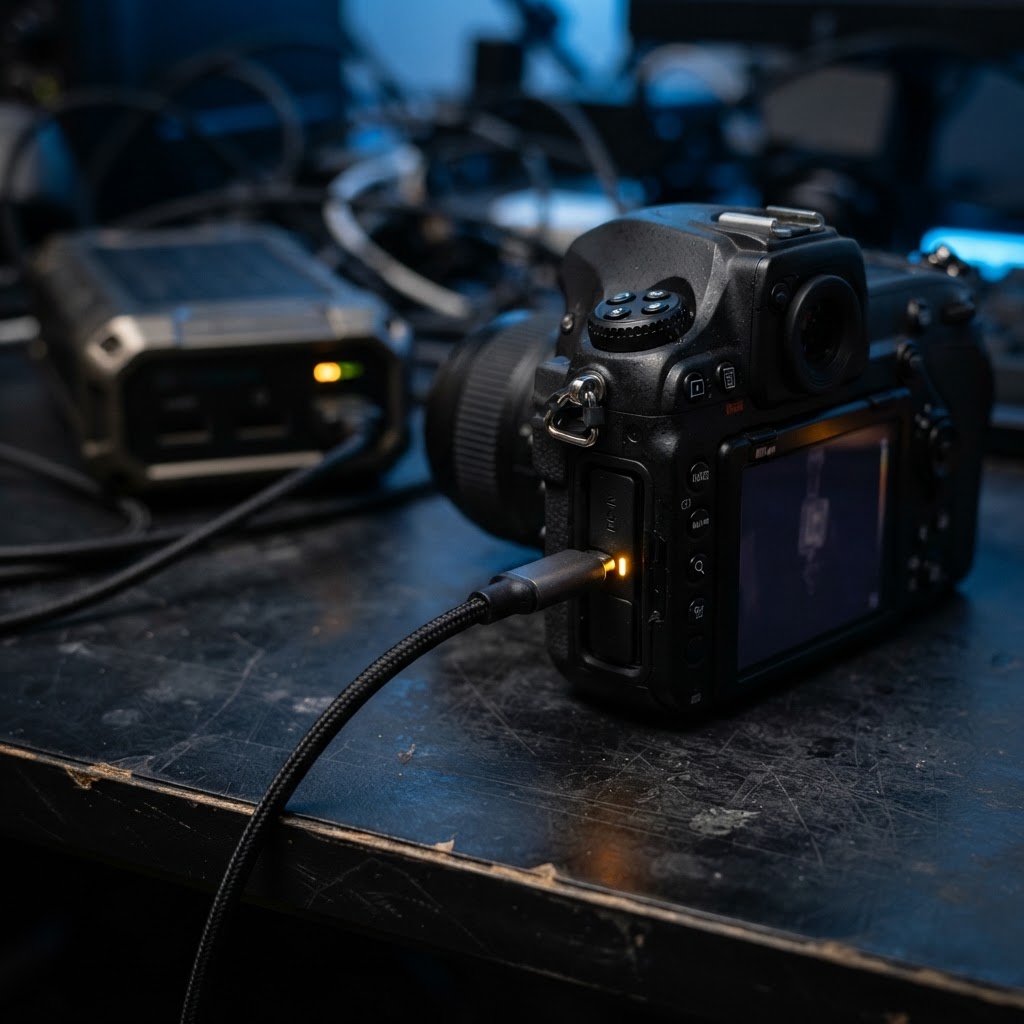

USB-C ports on thermal optics make power management simpler by standardizing connectors for power banks, vehicle adapters, and wall chargers. However, relying on improper chargers, extreme temperatures, or unsealed ports can compromise performance in the field.
What matters in a charger
- Sufficient amperage. ATN product manuals for models such as the ThOR LT, ThOR LTV, OTS LT, and OTS 4T specify a 2A output charger (5V/2A) as recommended. Charging from zero to 100% with a 2A adapter typically requires 6 hours (taking 6 to 8 hours depending on the platform), whereas lower amperage chargers take significantly longer to charge the internal batteries.
- Cable quality and type. Use quality USB-C data and charging cables. Units such as the ATN Blaze Hunter Series and ATN ThOR 6 mini Thermal Rifle Scope explicitly instruct users to charge using the included Type-C cable to maintain stable connections.
- Field power supplies. External USB-C power banks supply extended operational power for setups such as the Odin 6 MFT or BlazeTrek series.
- Pass-through operation. On compatible optics, such as the ATN ThOR 6 mini Thermal Rifle Scope, connecting external USB Type-C power allows the device to operate and charge simultaneously.
The routine
- Fully charge the optic and spare rechargeable cells (such as standard 18650 batteries on modular devices) prior to departing for the field.
- Pack a portable USB power bank and compatible USB-C cable for field top-ups or external running power.
- Keep the rubber port cover securely seated over the USB-C connection when not charging to block moisture and debris.
- Observe safe charging temperature thresholds: ATN guidelines specify keeping battery temperatures between 32°F and 140°F (0°C to 60°C) during charging; charging will disable outside safe operating temperatures.
- Store dedicated charging cables with the optic's carry pouch to ensure field availability.
Mistakes that cost a night
- Underpowered power sources. Plugging into low-current ports (such as passive 0.5A computer USB ports) extends charging times far beyond the standard 6-hour cycle.
- Ignoring temperature limits. Attempting to charge frozen optics below 32°F (0°C) can trigger automatic charging disablement or risk cell damage.
- Unsealed rubber covers. Leaving the USB-C port cap open invites dust, steam, and moisture into sensitive electronics.
- Failing to maintain long-term batteries. Neglecting long-term storage maintenance can cause deep discharge; ATN advises recharging lithium-ion batteries every 3 to 6 months during extended storage.
Bottom line
Adhering to manufacturer guidelines—including using a verified 2A charger, maintaining the protective rubber port seal, and observing the 32°F to 140°F charging window—ensures dependable runtime throughout extended night operations.


