640 vs 384 Thermal Sensor Resolution - What Actually Matters in the Field
Most buyers fixate on resolution numbers without understanding what drives real-world detection distance and image clarity. Walk into any thermal optics forum and you'll see the same debate: "Is 640 worth the extra money?" The honest answer is that it depends entirely on what you're doing with the scope, and most shooters are paying for resolution they'll never actually use.
This guide breaks down the practical difference between 640×480 and 384×288 thermal sensors in plain English — no marketing fluff, no spec-sheet worship. We'll cover what the numbers actually mean, how they translate to detection distance in the field, and whether the price premium makes sense for your specific use case. By the end, you'll know exactly which resolution tier you need and which ones you can safely skip.
What the Numbers Mean
A thermal sensor's resolution is simply the number of pixels on the microbolometer detector array. A 640×480 sensor has 307,200 individual thermal pixels. A 384×288 sensor has 110,592. That's roughly 2.8× more pixels on the 640.
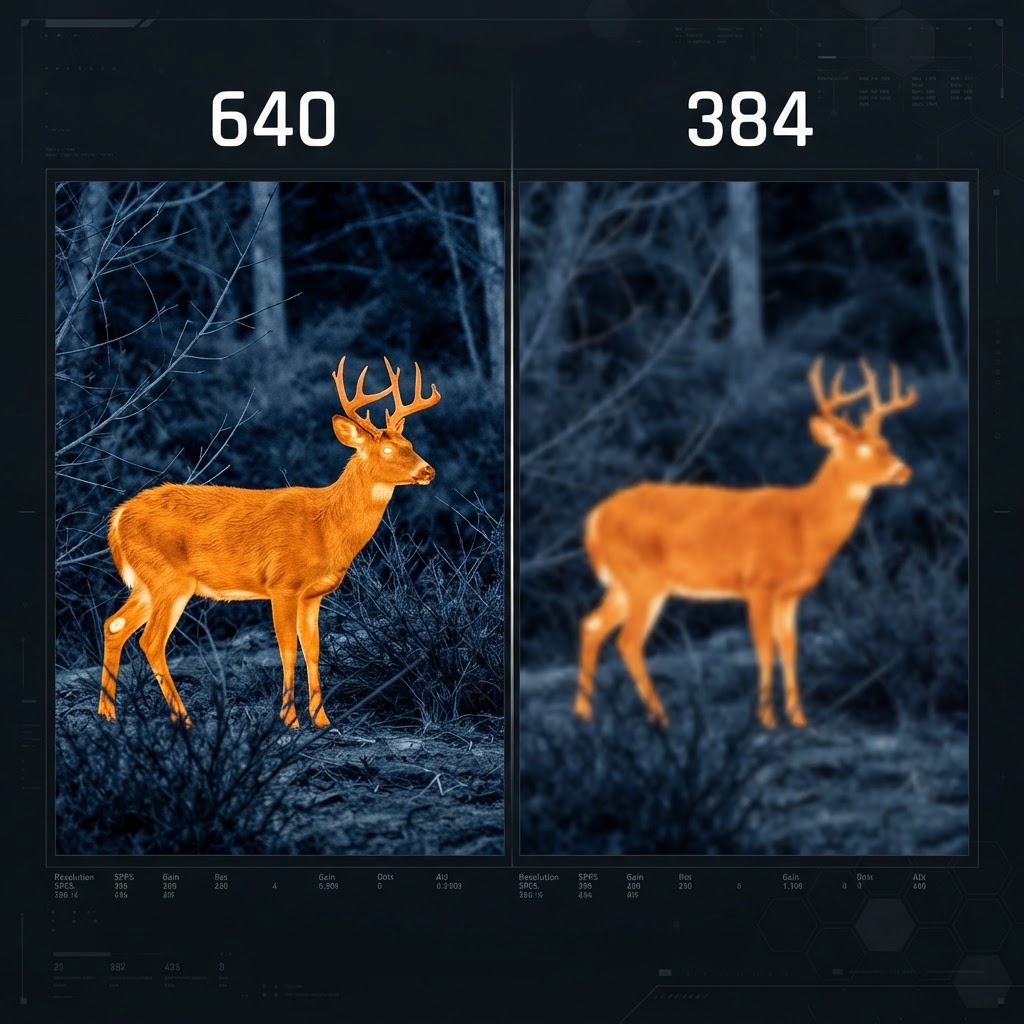
More pixels means two things: a wider field of view at the same magnification, or a tighter (more magnified) view of the same scene with more detail per target. The sensor itself doesn't "see farther" — detection distance is driven by the combination of sensor resolution, objective lens diameter, and pixel pitch. But more pixels do give you more detail at distance, which means you can identify what you're looking at rather than just detecting a heat blob.
Think of it like a digital camera. A 24-megapixel photo and a 12-megapixel photo of the same scene will both show the same mountain. But when you zoom in on a distant animal, the higher-resolution image holds together longer before it turns into a blocky mess. Thermal works the same way.
Detection Range Comparison at 640 vs 384
Here's where the marketing gets misleading. Manufacturers quote "detection range" numbers that are almost always calculated at the Johnson criteria for detection — meaning "is something hot out there?" — not identification — meaning "is that a hog or a coyote?"
A 640 sensor with a 35mm or 50mm objective lens will typically give you a detection range of 1,800–2,200 yards and an identification range of 700–900 yards. A 384 sensor with the same objective lens will detect at 1,200–1,800 yards but identify at 400–600 yards.
The practical gap is smaller than the spec sheets suggest. For most hog hunting and predator calling, your shots happen inside 200 yards. At that distance, a 384 sensor gives you plenty of detail to identify your target and place an ethical shot. The 640's advantage shows up when you're scanning wide open country at 500+ yards and need to sort out what's moving out there before committing to a stalk.
Use our Range Calculator to plug in your typical engagement distance and see exactly what each resolution delivers at that range.
Price Premium - Is 640 Worth It for Your Use Case?
The price jump from 384 to 640 is significant. In the current market, a quality 384 thermal scope lands between $1,500 and $3,500. A comparable 640 scope starts around $4,000 and can run past $12,000 for flagship models with large objective lenses and laser rangefinders.
640 is worth it if:
- You hunt open terrain (prairie, agricultural fields, ranches) where targets appear at 400+ yards
- You do thermal surveillance or perimeter security over large areas
- You need to identify targets (not just detect) at extended distances
- You want the widest possible field of view for scanning without sacrificing zoom
384 is the smarter buy if:
- You hunt in woods, thickets, or over feeders where shots are under 200 yards
- You're on a budget and want the best detection per dollar
- You're new to thermal and want to learn before committing to flagship pricing
- You primarily hunt hogs or predators at night over bait
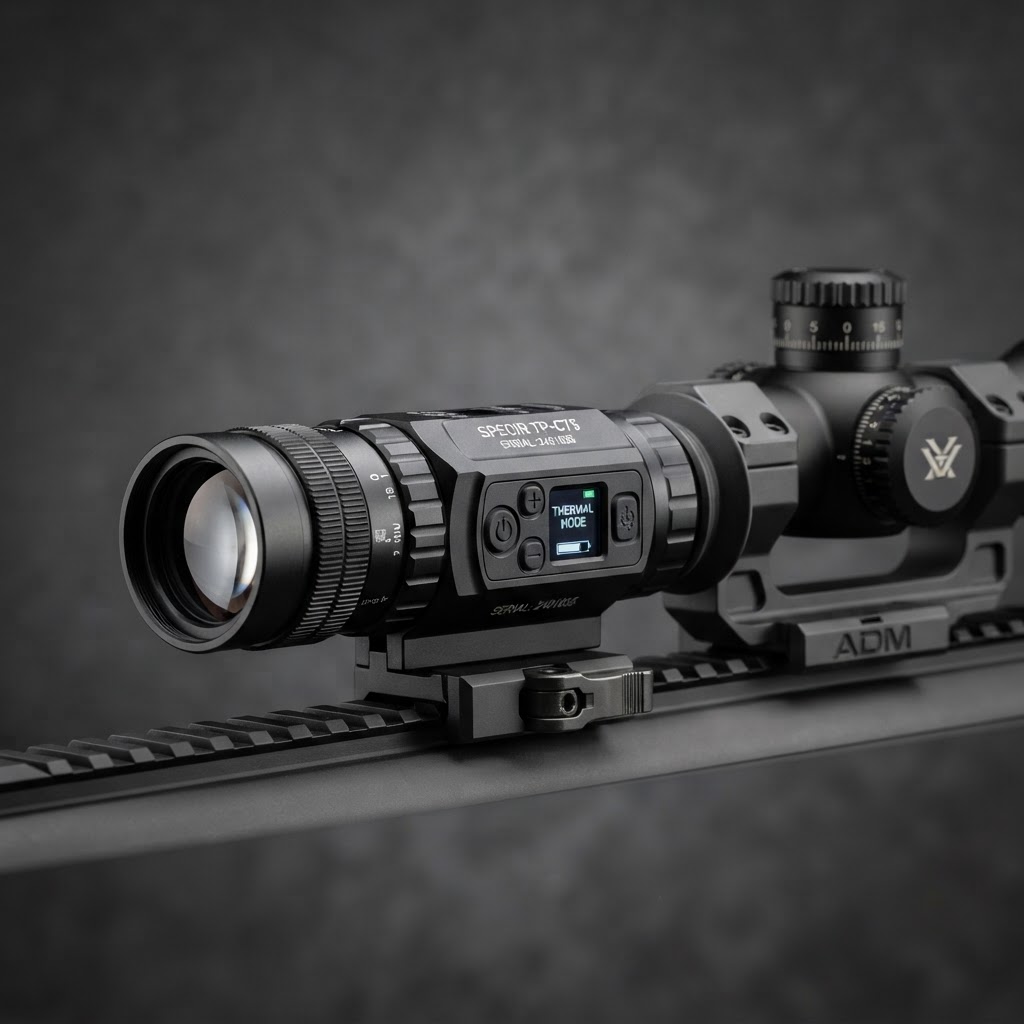
For most hunters, a 384 scope like the Pulsar Forward F 35-384 delivers 90% of the real-world performance at 40% of the price. You can always upgrade later — and by then, 640 sensors will be cheaper.
Best 640 Thermal Scopes Under $3,000
True 640-resolution thermal scopes start above the $3,000 mark in today's market. If you've decided the extra resolution is worth it for your terrain, browse our 640-resolution catalog to compare detection ranges, objective lens sizes, and pricing across every brand we carry.
Best 384 Thermal Scopes for Budget-Conscious Buyers
The 384 tier is where the value lives. You get excellent detection range, solid image quality, and prices that don't require a second mortgage. Browse all 384-resolution scopes or check out these standout picks:
- Pulsar Forward F 35-384 Thermal Clip-On — $1,699, 1,200yd detection, 25mK NETD. Best clip-on value.
- Pulsar Thermal Scope Mid-Range — $1,499, 700yd detection, 35mK NETD. Best dedicated scope under $1,500.
Not Sure Which Is Right for You?
Spec sheets only tell half the story. The best scope is the one that matches your terrain, your budget, and your shooting style — and that's hard to figure out from a comparison chart alone.
Take our 60-second AI Buyer's Guide and get a personalized recommendation based on your actual hunting conditions. It'll tell you whether 640 or 384 is the right call for you in under a minute.